Project
In fintech, users don't read. They decide in seconds
Client
Web3 Projects
Year
2022

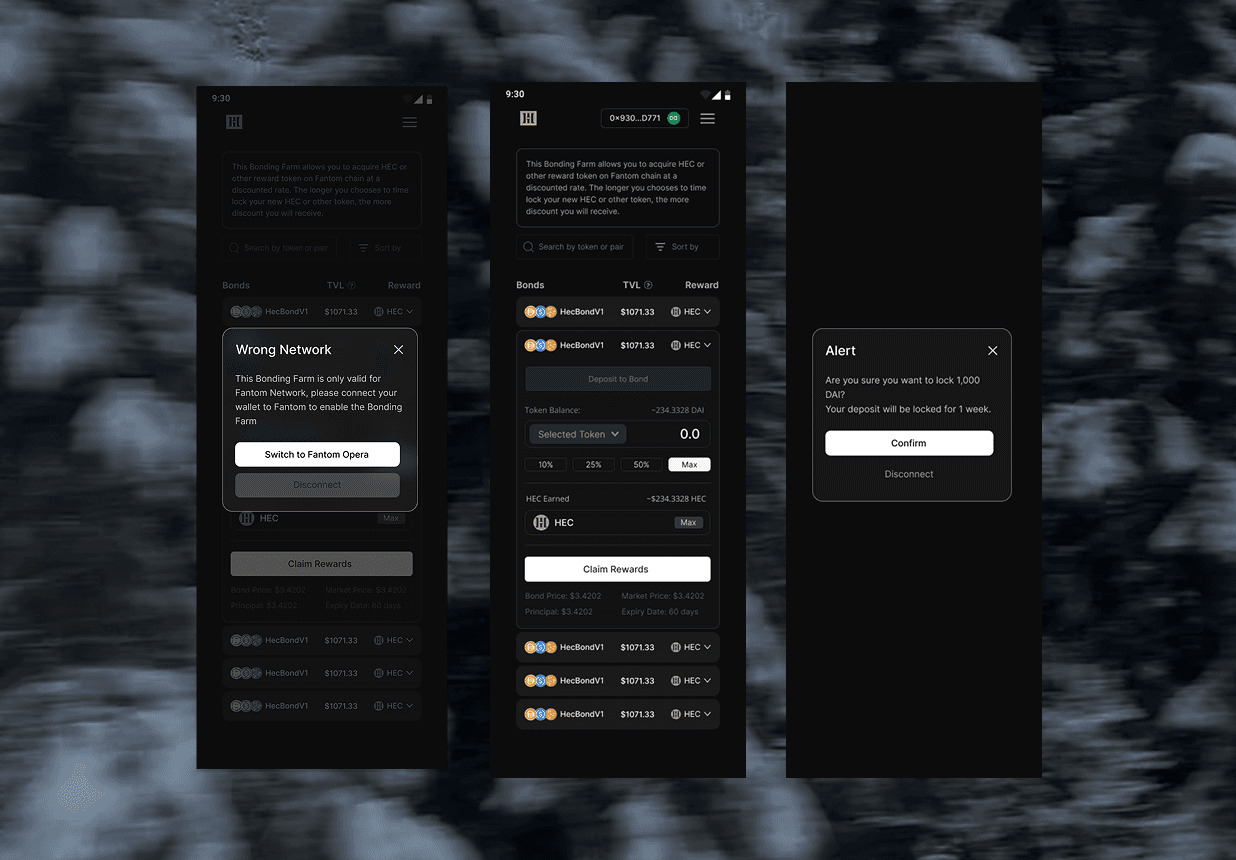

Designing for Fintech is a unique industry, with every company having their unique set of problems to solve, but at the end of the day only one thing matters ‘can the user perform a complicated task easily?’ as they have risk on the line. People often throw around fancy words to sound efficient, like ‘streamline’, ‘frictionless’ but what does that mean in real world practice? Finance can be a daunting experience to navigate as a user if you don’t have the technical knowledge to understand what to look out for. One of the most difficult industries I had to design for was for a dApp or a (decentralised app) where users had to be able to complete various tasks with multiple types of coins. Since the industry was fairly new at the time and every company was on the hot seat as potentially being a scam,so user experience and the interface had to be exceptionally reliable and trustworthy.
There were new features evolving in the ever changing Web3 industry pretty much every month. Users had to be able to complete their regular tasks such farming, staking, wrapping, swapping and minting coins easily and while also being confident in the newer features efficiently.
Every project usually had their own type of coin, and their own interface for exchanging/swapping etc. so on top of having to be a reliable and trustworthy top notch experience, it had to be better than the immediate competition, otherwise the user would go elsewhere.
In web3, everything is visible on the chain, so showing proof of transactions and history is critical to invoke trustworthiness. Placing strategic information blocks and success/error alerts, and statements of how much your coins are worth, how much are the gas fees, how long you might be staking your coins for and your predicted return, have to be clear and supporting to the main action to be taken.
Additionally, making it visually clear when you are connected vs not connected to your correct wallet address is also important as users have different wallets for different chains, and if the wallet is not supported, no action can be done on the interface.
Setting up contextual alerts, info blocks, and road blocks, in the right moments are a few real world methods of creating trustworthy products for fintech. These strategies are not limited to the Web3 world either as finance also employs similar tactics. My favourite example of a company that does finance user experience exceptionally well is Monzo. A fully digital banking experience, has a really great contextual flow for any task to complete. They don’t make the user feel daunted, or frozen, they give you the correct context when you need it, and never make you read or study to understand what you’re doing. I could go on and on about their strategies that I think make them extremely successful, but perhaps another day!